For many California homeowners, rising electricity bills have become hard to ignore. With utility costs from major providers increasing year after year, managing monthly energy expenses now feels like a long-term concern rather than a temporary spike. It’s no surprise more people are asking, should I get solar panels on my house, especially with policy changes like NEM 3.0 reshaping how energy credits work.
Choosing solar for your home isn’t just about sustainability anymore. It’s a practical decision focused on controlling costs, protecting against future rate hikes, and improving long-term property value. This guide breaks down what solar ownership really looks like today and helps you decide if it makes financial sense for your home.
Key Takeaways
Research consistently shows that solar installations can increase property value, as buyers prioritize homes with low or zero monthly utility obligations.
Under current regulations(NEM 3.0), the value of solar is maximized when paired with battery storage, allowing you to use your own power during expensive peak evening hours.
The 30% Residential Clean Energy Credit remains a powerful tool to reduce the net cost of your system by thousands of dollars.
Transitioning to solar shifts you from a renter of electricity to an owner of your energy production source.
Is Going Solar a Smart Home Investment? What Homeowners Should Know
When evaluating a solar panel's home investment decision, you must look at the transition from a liability to an asset. Currently, your monthly utility bill is a pure expense with a 0% return.
By installing a solar system, you are essentially pre-paying for 25 years of electricity at a fixed, lower rate.
The decision to go solar in regions like the Inland Empire, Riverside, or Los Angeles is often triggered by the realization that utility costs are no longer predictable. For a homeowner with a $300 monthly bill, a 7% annual rate hike means that same bill could exceed $500 in just a few years.
Solar provides a maximum limit on these costs. However, this investment requires a clear look at your roof's health, your sunlight exposure, and your planned duration of homeownership.
Moving from the conceptual logic of solar to the practical implementation involves looking at the specific financial benefits that make this investment attractive in the US market.
Should I Get Solar Panels on My House? Making the Right Home Investment Decision
The internal debate of Should I get solar panels on my house usually centers on the payback period. In California, the average payback period for a professionally installed system ranges from 5 to 9 years.
Given that panels are warrantied for 25 years, this leaves 16 to 20 years of nearly free electricity.
The Financial Risk of Inaction
To understand the investment, you must calculate the total expenditure remaining with the utility. If you spend $3,600 a year on electricity today, over the next 20 years, accounting for standard rate increases, you will pay the utility company over $100,000.
A solar system, even with financing interest, typically costs a fraction of that total.
Breaking Down the ROI Components
The 30% Federal Tax Credit (ITC): This is a dollar-for-dollar reduction in your federal income tax liability. On a $30,000 system, this is a $9,000 direct benefit.
Net Billing Gains: While NEM 3.0 has reduced the export value of solar, the value of avoided cost remains high. Every kilowatt-hour you produce and consume yourself is energy you did not have to buy for 40 to 60 cents from the grid.
Property Appreciation: Data from real estate platforms indicates that homes with solar panels sell for a higher premium than those without. For a $750,000 home in Southern California, this can represent a significant increase in equity.
Evaluating these numbers requires a deep dive into the specific factors that dictate whether your specific property will yield these returns.
Also Read: Beyond the Roof – Benefits of Ground-Mounted Solar Panels
Key Factors That Shape Your Solar Panels Home Investment Decision
A solar panel's home investment decision is highly individualized. What works for a neighbor might not work for you if your roof orientation or shading is different. To ensure a positive ROI, several technical and environmental variables must be assessed.
1. Sunlight Exposure and Shading
Your system needs a clear path to the sun, particularly between 10 AM and 4 PM. Even partial shading from a chimney or a neighbor's tree can significantly reduce the output of an entire string of panels.
Modern micro-inverters help mitigate this, but site placement remains the most critical factor in production.
2. Roof Condition and Orientation
In the Northern Hemisphere, south-facing roofs provide the highest total energy production. However, with California Time-of-Use (TOU) rates, west-facing roofs are increasingly valuable because they produce power during the late afternoon when electricity is most expensive.
Furthermore, if your roof is near the end of its life, we often recommend a roofing remodel before or during the solar installation to avoid the cost of removing and reinstalling panels later.
3. Local Utility Rate Structures
The value of your solar is directly tied to what you would have paid otherwise. If you live in an area with tiered pricing or high peak-hour rates, your solar savings are much higher than those of someone in a region with flat, low-cost electricity.
In Southern California, the disparity between solar production costs and utility rates is among the highest in the country, making the investment particularly lucrative.
Once the technical feasibility is confirmed, the next logical step for most homeowners is exploring how to pay for the system without disrupting their cash flow.
Financing Options: Cash, Loans, and Leases
Deciding on the right payment structure is as important as the panels themselves. Each method changes the timeline of your ROI and who ultimately benefits from the tax incentives.
Cash Purchase
A cash purchase offers the fastest ROI and the highest long-term savings. You own the system immediately, you claim the 30% tax credit, and you have no monthly interest payments. This is the optimal path for a solar panel home investment decision if the liquid capital is available.
Solar Loans
Most Californians choose specialized solar loans. These are often structured so that your monthly loan payment is equal to or less than your previous average utility bill. This creates immediate savings where your total monthly overhead decreases from the first month.
You still own the system and can claim the federal tax credit, which is often used to pay down the loan principal in the first 18 months.
Solar Leases and PPAs (Power Purchase Agreements)
In a lease or PPA, a third party owns the system on your roof. You pay a fixed rate for the power the system produces. While this requires zero dollars down and provides immediate bill reduction, you do not receive the 30% tax credit, and the long-term total savings are lower than ownership.
This option is best for homeowners who cannot utilize the federal tax credit but still want lower energy costs.
Choosing a financing path leads to the long-term reality of owning the system, specifically, how much work is required to keep it running.
Maintenance and Longevity of Your Investment
One of the most common concerns when asking should I get solar panels on my house is the fear of ongoing maintenance costs. Fortunately, solar is a solid-state technology with no moving parts, making it exceptionally reliable.
Monitoring: Most modern systems come with a mobile app that allows you to see production in real-time. If a panel or inverter underperforms, the system alerts the installer automatically.
Cleaning: In the dusty climates of the Central Valley or Inland Empire, a simple annual or semi-annual cleaning with water can improve efficiency by 5% to 10%.
Warranty Protection: Industry-standard warranties cover panels for 25 years and inverters for 10 to 25 years. This aligns with the long-term asset nature of the investment.
The reliability of the hardware is high, but the administrative side of the process, permitting and utility coordination, requires a different level of expertise.
Navigating the California Permitting and Interconnection Process
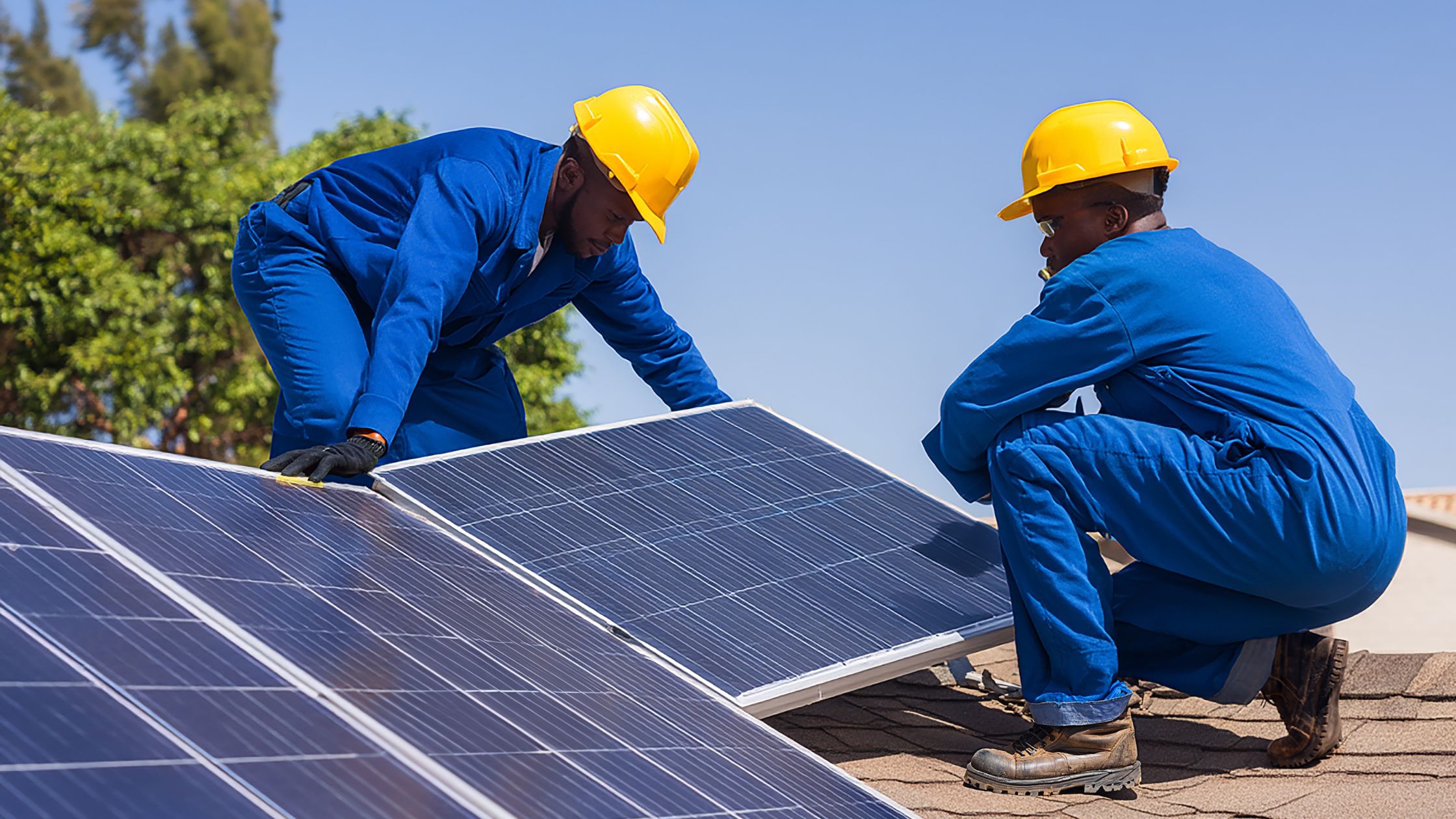
The solar panels' home investment decision involves significant administrative steps. California has some of the most rigorous building codes and utility requirements in the nation. A local installer must manage:
City/County Permitting: Ensuring the structural integrity of the roof and adherence to fire safety codes, such as setback requirements for firefighter access.
Utility Interconnection: Applying for permission to operate from the utility. This process involves verifying that your system will not negatively impact the local grid.
NEM 3.0 Documentation: Correctly filing the paperwork to ensure you are enrolled in the proper billing structure to maximize your credits for excess power.
Managing these steps correctly is what separates a successful project from a months-long delay. This leads to the final, most important choice: who will perform the work.
Why Local Expertise Matters for Your Solar Success
When you decide to move forward with a solar panel home investment decision, who you choose to partner with determines the quality of your ROI. National lead aggregators often lack the specific knowledge of California’s complex regional requirements.
At CA Home Solar, we position ourselves as a local execution partner. We understand the specific wind zones of the Inland Empire, the permitting requirements of Los Angeles, and the evolving rate structures of our local utilities.
We do not just sell equipment; we design a financial tool tailored to your home energy profile.
By focusing on properly sized systems and high-quality installations, we ensure that your answer to Should I get solar panels on my house remains a yes for decades to come.
Wrapping Up
A solar panel home investment decision is one of the most impactful choices a California homeowner can make in 2026. By shifting from a model of high, volatile utility expenses to a model of predictable, clean energy ownership, you protect your household's financial health.
While the transition requires careful planning and a deep understanding of local regulations, the long-term rewards of cost-control and energy independence are substantial.
Take control of your home’s energy future.
Reach out to CA Home Solar to coordinate a professional site assessment and see exactly how a modern solar-plus-storage system integrates with your energy goals.
Frequently Asked Questions (FAQs)
1. Does solar still make sense under NEM 3.0?
Yes, but the strategy has changed. Under NEM 3.0, the export value of solar is lower. To maximize your investment, you should pair solar with a battery. This allows you to store your midday energy and use it at night, avoiding the need to buy expensive power from the utility.
2. Will solar panels damage my roof?
No, if installed correctly. In fact, solar panels protect the portion of the roof they cover from UV degradation and weather. Professional installers use high-quality flashing and sealants to ensure the roof remains watertight.
3. How long does the installation process take in California?
The physical installation usually takes only 1 to 3 days. However, the entire process, including site evaluation, design, city permitting, and utility approval, typically takes 3 to 6 months.
4. What happens if I sell my home before the panels are paid off?
If you have a loan, you can either pay it off with the proceeds of the sale or transfer the loan to the new buyer. Since solar increases the home value, the premium paid by the buyer often covers the remaining balance of the system.
5. Can solar power my home during a blackout?
Only if you have a battery backup. Standard solar systems are designed to shut down during a blackout to prevent back-feeding power into the grid, which could be dangerous for utility workers. A battery allows your home to isolate itself and keep the lights on.