Solar panels are designed to be low-maintenance, but that doesn’t mean they’re maintenance-free. In California, everyday realities like dry winds, traffic pollution, construction dust, and wildfire residue quietly settle on panels and stay there for months. Over time, this thin layer of grime can interfere with how much sunlight your system actually absorbs. If you’ve ever noticed your energy savings dipping without a clear reason, dirty panels could be the culprit. Relying on occasional rain isn’t always enough, especially during long dry spells common across Southern California. Regular cleaning helps ensure your panels operate at full capacity and continue delivering the performance you expect from your home solar investment.
Key Takeaways
Regular cleaning can restore lost power output, with research showing that removing heavy dust or ash can boost efficiency by up to 20%.
Homeowners in high-dust or agricultural areas, like Riverside or San Bernardino, typically need more frequent cleaning than those in coastal regions.
Cleaning often involves working at heights and handling electrical components; utilizing the right tools and safety gear is non-negotiable.
By keeping panels clear, you ensure your system hits its production targets, which speeds up the payback period of your investment.
Do Solar Panels Need to Be Cleaned?
While solar panels are designed to be durable and self-sufficient, they are not entirely maintenance-free. To understand why cleaning is necessary, it helps to look at how light interacts with the photovoltaic cells.
Here is a detailed breakdown of the factors that necessitate periodic cleaning:
The Impact of Soiling: In the solar industry, the accumulation of dirt is referred to as soiling. This occurs when a physical layer of debris settles on the tempered glass.
Since solar energy relies on photons passing through the glass to hit the silicon cells, any obstruction, no matter how thin, will scatter or block that light, directly reducing the amount of electricity your home produces.
Loss of Energy Efficiency: Research and real-world data indicate that dirty panels can lose anywhere from 5% to 25% of their total power output. In high-pollution areas or regions with heavy dust, like the Inland Empire, this loss can be even more significant.
If your system is underperforming by 20%, you are essentially losing 20% of your monthly financial savings.
Inadequacy of Rain Alone: A common misconception among homeowners is that rain will do the job for them. In California, we often experience light mists or "dry" rain that captures dust in the air and deposits it onto the panels.
Rather than cleaning the surface, this often creates a muddy residue or water spots that harden under the hot sun, creating a more difficult barrier for sunlight to penetrate.
The "Christmas Light" Effect: Most solar systems are wired in strings. If one panel in a string is heavily obscured by bird droppings or a thick layer of leaves, it can act as a bottleneck for the entire string.
This means a small amount of localized dirt can have a disproportionately large negative impact on the entire system's performance.
Accumulation of Specialized Contaminants: Depending on your specific location in Southern California, your panels may face unique challenges:
Bird Droppings: These are acidic and opaque. They block light entirely and can even cause hot spots that damage the cells over time if not removed.
Pollen: During the spring, a thick yellow film of pollen can coat the glass, which is notoriously difficult for light rain to wash away.
Ash and Soot: During wildfire seasons, fine ash can settle on arrays. This ash is highly shaded and significantly reduces production compared to standard dust.
Sea Salt: In coastal regions like Orange County, salt spray can create a hazy, crystalline film that builds up and requires a fresh-water rinse to clear.
Protecting Your Payback Period: You made a solar panel home investment decision based on a specific financial return. If your panels are dirty and producing less power, you are forced to buy more expensive electricity from the utility grid.
Keeping your panels clean ensures you hit your production targets and achieve your expected ROI as quickly as possible.
Also Read: Buy or Lease Your Solar Panels? You need to know this.
How Often Should Solar Panels Be Cleaned?
Determining how often solar panels should be cleaned is not a one-size-fits-all answer. While a general rule of thumb is twice per year, your specific environment dictates the frequency.
Seasonal Cleaning Cycles
Spring Cleaning: This is ideal for removing winter grime and the heavy pollen counts that occur as California plants bloom.
Late Summer/Early Fall: In the Inland Empire and Central Valley, the end of the dry season usually sees the highest accumulation of dust. Cleaning during this time ensures your panels are ready for the shorter days of winter when every bit of sunlight counts.
Environmental Stressors
If you live near an agricultural area, the dust from tilling can settle on your panels weekly. Similarly, homes near major freeways may deal with greasy soot from vehicle exhaust, which requires more frequent attention than standard dust.
According to research on dust impact, heavy accumulation in dry climates can lead to power losses exceeding 20% if left untreated for an entire season.
Once you have established a schedule, the next step is deciding whether to handle the task yourself or hire a professional service.
DIY vs. Professional Solar Panel Cleaning
When answering the question of whether I should get solar panels on my house, many homeowners forget to factor in the logistics of maintenance. You have two primary paths for keeping the glass clear: the Do-It-Yourself approach or hiring a specialized cleaning company.
The DIY Approach
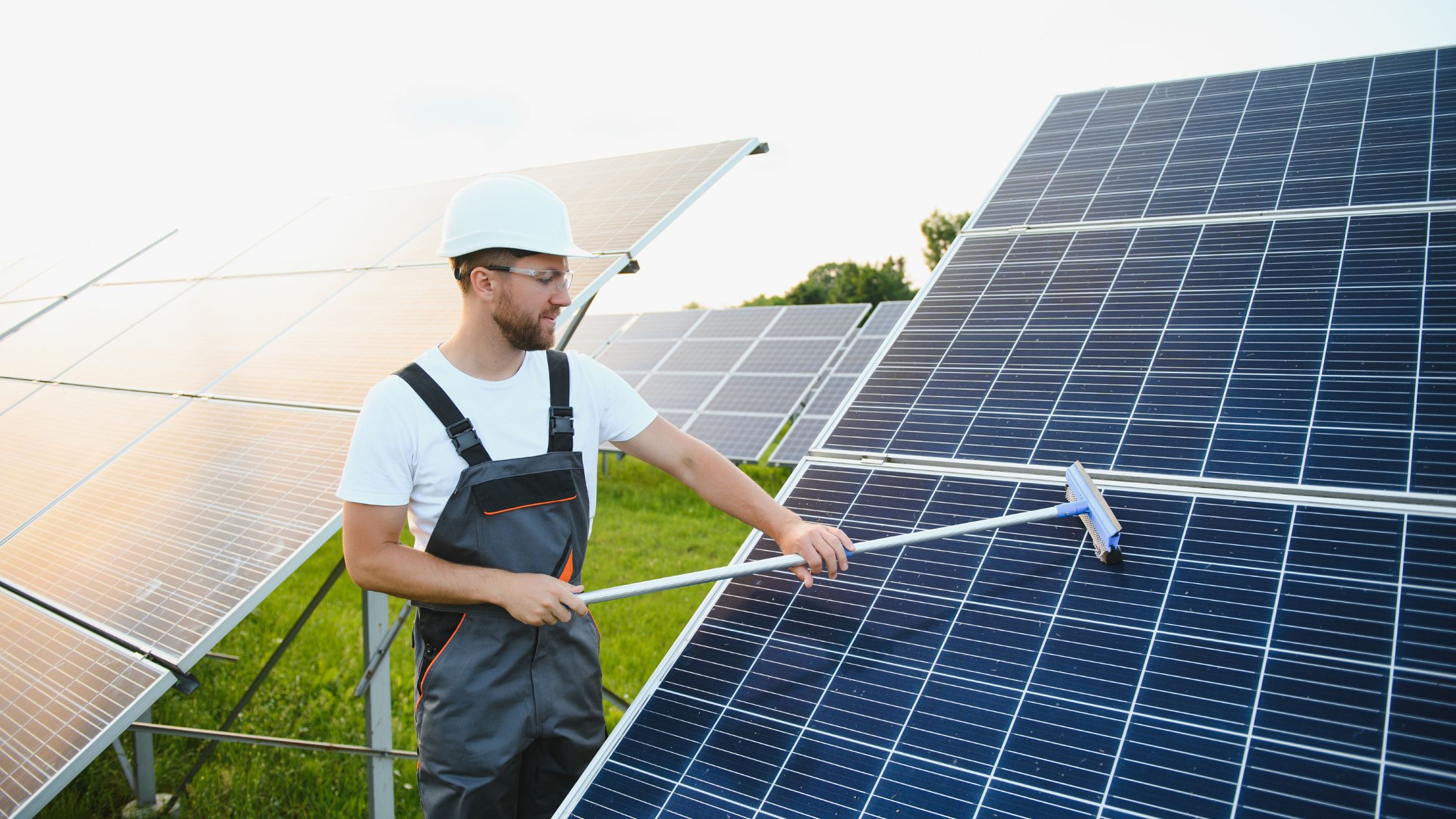
Cleaning your own panels can be cost-effective if your system is easily accessible. For ground-mounted systems or low-pitched single-story roofs, a homeowner can often perform a basic cleaning with a garden hose and a soft-bristle brush.
However, the risk of injury from falls is a serious consideration. Statistics from the CDC indicate that ladder-related accidents are a leading cause of home injuries in the US, making safety the top priority.
Professional Cleaning Services
Professional cleaners bring specialized equipment, such as deionized water systems that leave a streak-free finish without the use of harsh chemicals. They also perform a detailed inspection while on the roof, looking for cracked glass, loose wiring, or signs of pest nesting that you might miss from the ground.
While this comes with a service fee, the combination of safety and thoroughness often provides a better long-term value.
Understanding the pros and cons of each method leads naturally into the specific steps and tools required for a safe, effective cleaning process.
Step-by-Step Guide to Cleaning Solar Panels Safely
If you choose the DIY route, following a specific protocol ensures you do not damage the sensitive anti-reflective coating on the glass or risk an electrical hazard.
Timing is Everything
Never clean your panels in the middle of a hot California day. The tempered glass can reach temperatures over 150°F. Introducing cold hose water to a hot panel can cause sudden temperature stress, leading to micro-cracks or total glass shattering.
Aim for early morning or late evening when the panels are cool to the touch.
Shut Down the System
While the panels are sealed, it is best practice to turn off the system via the AC/DC disconnect or the main solar breaker in your electrical panel. This eliminates the risk of water interacting with any potentially frayed wires or damaged conduit.
Use the Right Tools
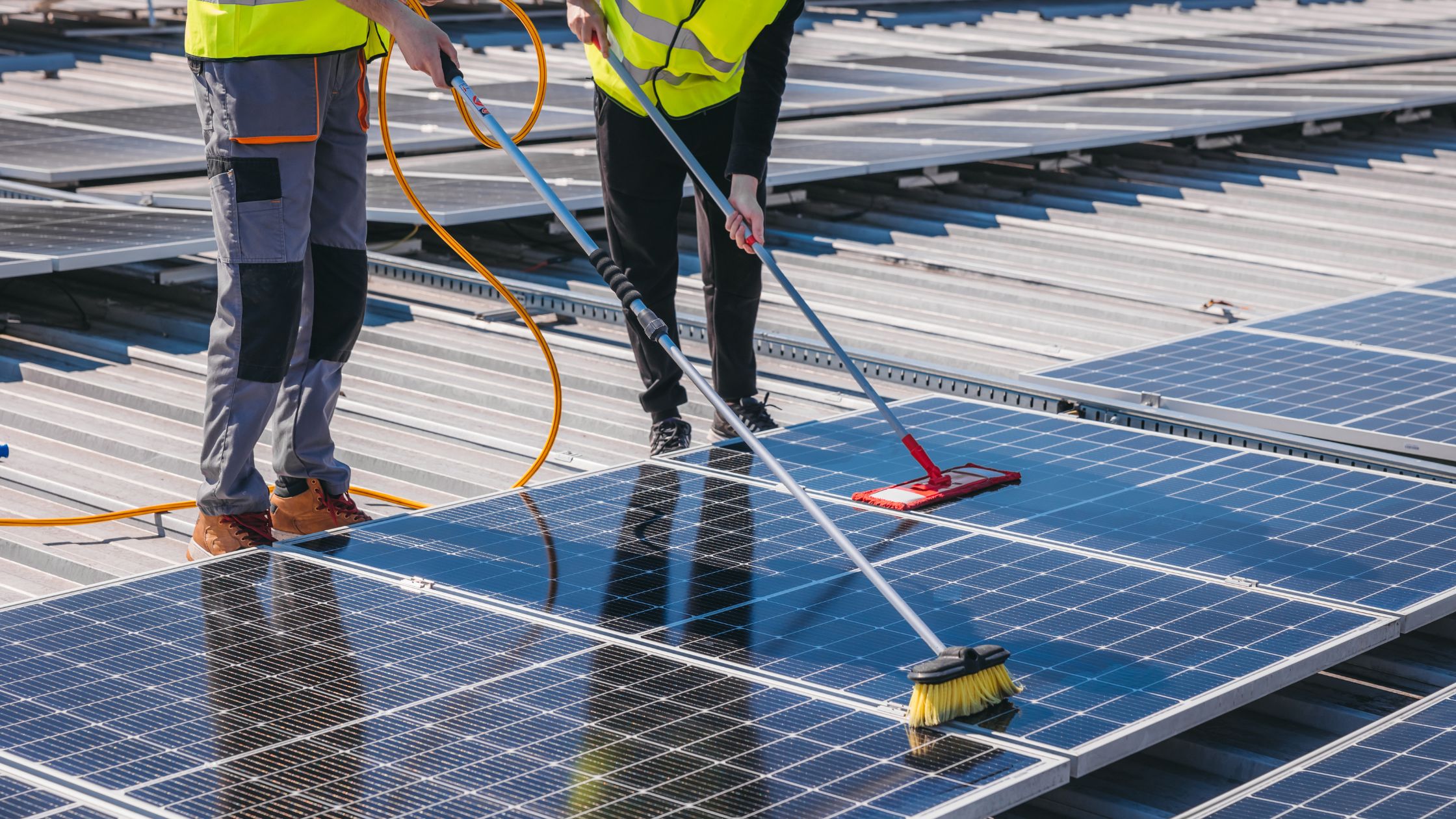
Soft Brushes: Use a telescopic pole with a soft-bristle head designed specifically for solar or vehicles. Never use wire brushes or abrasive pads.
Deionized or Soft Water: Hard water from a standard garden hose can leave white mineral deposits that are harder to remove than the dust itself. If your water is hard, consider a hose-end water softener.
Mild Soap Only: If water alone does not work, use a tiny amount of biodegradable dish soap. Avoid harsh detergents or ammonia-based cleaners, which can strip the protective coatings.
The Cleaning Process
Rinse First: Use a low-pressure stream to wash away loose dirt. Never use a high-pressure power washer, as the force can damage the seals between the glass and the frame.
Gently Scrub: Use your soft brush to agitate stubborn spots like bird droppings or tree sap.
Squeegee Dry: To prevent water spots, use a squeegee to remove excess moisture, leaving the glass crystal clear.
After the physical cleaning is done, the focus shifts to maintaining that efficiency through consistent monitoring.
How to Monitor Your System for Cleaning Needs
You do not always need to climb a ladder to know if your panels are dirty. Most modern solar installations, like those provided by CA Home Solar, come with advanced monitoring apps.
Analyzing Production Data
If you notice a gradual 10% to 15% decline in daily production during a period of clear, sunny weather, it is a strong indicator of soiling. By comparing your current output to the same month in previous years, you can see if environmental buildup is the culprit.
Visual Cues from the Ground
Check the angle of your panels. Panels with a lower tilt tend to accumulate more dust and water spots than those with a steeper pitch. If you live in a coastal area like Orange County, keep an eye out for salt spray residue, which can create a hazy film that significantly blocks sunlight
The transition from identifying the problem to fixing it is the final step in ensuring your home remains an energy-independent powerhouse.
Why Professional Maintenance Supports Your ROI
At CA Home Solar, we view maintenance as a component of your broader financial strategy. A clean system is an efficient system, and an efficient system pays for itself faster. Whether you are in the middle of a solar panel home investment decision or have been an owner for years, understanding the health of your array is vital.
Protecting Your Warranty
Many high-end panel manufacturers include language in their warranties regarding proper care. While they do not expect you to polish them weekly, showing that the system has been maintained and kept free of debris can be helpful if you ever need to file a performance claim.
Longevity of Components
Cleaning is not just about the glass. During a professional maintenance visit, technicians check the mounting hardware and the integrity of the solar racking. In Southern California's heat, plastic clips and wire ties can become brittle over time.
Catching these small issues during a cleaning visit prevents larger, more expensive repairs down the road.
Wrapping Up
Maintaining your solar system is the key to ensuring your solar panel home investment decision continues to pay dividends for the next 25 years. By understanding that cleaning is a vital part of ownership, you can take the necessary steps to protect your production levels.
Whether you choose to handle the maintenance yourself or rely on the expertise of a professional, keeping that glass clear is the simplest way to keep your utility bills low.
Partner with CA Home Solar for Long-Term Success
In Southern California, a solar system is only as good as its upkeep. At CA Home Solar, we do not just stop at the installation. We are dedicated to ensuring every homeowner in Los Angeles, Orange County, and the Inland Empire has the resources and knowledge to keep their system running at peak performance.
Why trust CA Home Solar?
Regional Expertise: We know exactly how California dust and weather patterns affect your ROI.
Comprehensive Support: From initial design to long-term maintenance advice, we are your energy partners.
Quality First: We only install hardware with the best durability and warranty ratings in the industry.
Contact CA Home Solar today for a personalized cost-benefit analysis and discover how a custom solar installation can stabilize your monthly utility expenses.
Frequently Asked Questions (FAQs)
Does rain clean solar panels effectively?
Rain can remove light dust, but it often is not enough to remove sticky contaminants like bird droppings, ash, or soot. In California, light rain can actually make panels dirtier by mixing with existing dust to create a muddy film.
Can I use a pressure washer on my solar panels?
No. High-pressure water can force its way past the seals of the panel or damage the internal wiring. It can also create micro-fractures in the glass. Always use a standard garden hose with a low-pressure nozzle.
Will dirty solar panels stop working completely?
No, they will still produce power, but their efficiency will drop. Depending on the level of dirt, you could be losing between 5% and 25% of your potential energy savings every day.
Is it worth paying for a professional solar cleaning service?
For most homeowners with roof-mounted systems, the answer is yes. The safety benefits and the thoroughness of professional tools, combined with a system health check, usually outweigh the cost, especially if it helps you avoid a fall or a damaged panel.
Should I use chemicals or glass cleaner to clean my panels?
No. Harsh chemicals and glass cleaners can leave a residue that actually attracts more dust. They can also damage the anti-reflective coating. Stick to soft water and, if absolutely necessary, a very mild, biodegradable soap.