Introduction
Southern California homeowners face a critical timing dilemma when considering solar: the panels you install today will generate power for 25–30 years, but if your roof fails in just five years, you'll face removal and reinstallation costs that can easily exceed $6,000—wiping out years of solar savings. That's a sequencing problem as much as a financial one.
The core mismatch is simple: solar systems are warrantied for decades, while typical asphalt roofs in SoCal last 20–30 years. Installing panels on a roof with fewer than 10–15 years of life left forces you into an expensive mid-cycle disruption—paying twice for labor you could have bundled once.
This guide covers when roof replacement is necessary before solar, how to read the condition indicators your roof is showing you, and how bundling both projects under one contractor can reduce your total cost while aligning both systems on the same lifecycle.
TL;DR
- Solar panels last 25–30 years; replace your roof first if it has fewer than 10–15 years of life remaining
- Three factors determine replacement need: age, current condition, and material type
- Removing and reinstalling panels later costs $200–$300 per panel ($6,000 to $13,500 for a typical residential system)
- Bundling both projects saves $3,000–$5,000 through shared labor, permitting, and mobilization costs
- A roof under 10 years old with no structural damage can go straight to solar installation
Why Your Roof's Condition Is the Foundation of Your Solar Investment
The fundamental problem is a lifecycle mismatch. Solar systems are designed and warrantied to produce power for 25–30 years, with degradation rates typically below 0.5% annually. Meanwhile, asphalt shingle roofs—the most common type in Southern California—last 20–30 years, and intense UV exposure pushes many toward the lower end of that range.
When your roof and solar system aren't on the same replacement cycle, you're forced into costly mid-life removal. That's a predictable expense when the timing isn't aligned from the start—not a hypothetical risk.
Installation Quality Depends on Structural Integrity
A compromised roof directly undermines installation quality. Every solar array requires:
- Penetrations for mounting hardware that must be sealed watertight
- Rail systems anchored to rafters through the decking
- Flashings around every attachment point to prevent water intrusion
Damaged decking, soft spots, or deteriorated underlayment prevent proper mounting angles, reduce panel efficiency, and create leak paths. Installers can't compensate for structural problems—they can only work with the surface you give them.
Weight and Structural Load Considerations
Solar panels add 3–4 pounds per square foot to your roof structure. While most modern wood-framed roofs in Southern California can handle this load, aging or deteriorating structures may fail the assessment required by California Building Code and ASCE 7-22 standards.
An inspector must confirm that:
- Decking is solid and free of rot
- Rafters can support the added dead load
- The roof structure shows no existing deflection or sagging
If your roof is already compromised, adding solar weight accelerates failure.
Solar Panels Protect New Roofs—But Only If They Start Sound
Solar panels extend the life of the shingles beneath them by shielding the surface from direct UV, heat, and weather exposure. That protection only applies to healthy material, though. Panels can't reverse existing damage—they preserve what's already working.
Warranty Coverage Depends on Honest Assessment
Most solar installation warranties include limited roof coverage for the area under the panels. However, this warranty is typically voided if the installer flagged roof deficiencies that you chose to ignore.
If your installer notes concerns about roof condition in their site survey and you proceed anyway, you're accepting full responsibility for future problems, along with any warranty protection for that area.
Roof Age, Condition, and Material: When You Need a Replacement First
The "replace or skip" decision comes down to three interconnected factors that must be evaluated together, not in isolation: age, observable condition, and material type.
Based on Roof Age
Asphalt shingle roofs over 15–20 years old are approaching the end of their serviceable life. A solar system lasts 25+ years — a roof with fewer than 10–15 years remaining is a mismatch that will cost you more in the long run.
Here's how age maps to replacement urgency:
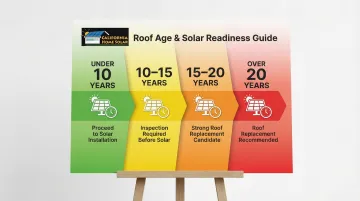
- Under 10 years old: Typically well-suited for solar without replacement
- 10–15 years old: Gray area — requires professional inspection to assess remaining life
- 15–20 years old: Strong candidate for replacement before solar
- Over 20 years old: Replacement almost always recommended
Based on Visible Condition and Structural Integrity
Age gives you a starting point, but condition determines the verdict. These red flags indicate replacement is needed regardless of how old the roof is:
- Cracked, curling, or missing shingles – indicates asphalt has become brittle
- Visible soft spots or sagging decking – structural failure is already occurring
- Evidence of active or past leaks – water stains in attic, interior ceiling damage
- Damaged or inadequate flashing – around chimneys, vents, or roof penetrations
- Deteriorated underlayment – visible from attic inspection
- Excessive granule loss – granules accumulating in gutters
A professional inspection will catch what a ground-level visual cannot. Walking the roof reveals soft spots; attic inspections expose leaks and underlayment condition.
Once you know where your roof stands on age and condition, material type determines the specific risks and installation approach for solar.
Based on Roof Material
Asphalt Shingles (Most Common):
- Last 20–30 years; good solar substrate when in sound condition
- UV degradation accelerates faster here than in most U.S. climates — age them conservatively
Tile Roofs (Common in SoCal):
- Tiles themselves last 50+ years, but the underlayment beneath them typically doesn't
- Aging tile (20+ years) becomes brittle and can crack under installer foot traffic
- May require targeted repairs, underlayment replacement, or a "comp-out" — replacing tiles under the array with asphalt shingles
Metal Roofs:
- Last 40–70 years; generally the best substrate for solar installation
- Standing seam metal allows clamp-mounting without any roof penetrations, which eliminates leak risk entirely
When You Can Skip the New Roof and Go Solar Now
You don't need a roof replacement if your home meets these criteria:
- Roof is under 10 years old
- No visible damage (cracking, curling, missing shingles, soft spots)
- Sound structure (no sagging, water stains, or attic evidence of leaks)
- Compatible material (asphalt, metal, or concrete tile in good condition)
In this scenario, you can proceed directly to solar installation with confidence.
Minor Repairs Should Still Be Completed First
Even if full replacement isn't needed, minor repairs should be completed before panels go up:
- Replacing a few broken tiles
- Resealing flashing around vents or chimneys
- Fixing isolated soft spots or small leak areas
Access becomes difficult and expensive once panels are installed. Lifting them to fix a small leak later costs far more than addressing it now.
Get an Independent Inspection
Knowing what repairs are needed starts with an honest assessment. A pre-installation inspection by a licensed roofing contractor—separate from the solar company's site survey—provides independent confirmation and protects you from installers who may overlook issues to close the sale faster.
CA Home Solar includes a free roof assessment as part of every consultation. If your roof is borderline, a third-party inspection adds an extra layer of confidence before you commit.
What Happens If You Put Solar on a Failing Roof
Installing solar on an aging roof doesn't just delay the problem — it multiplies the cost when the roof finally fails.
The Financial Consequence
When an aging roof fails after solar is installed, you must pay for three separate costs:
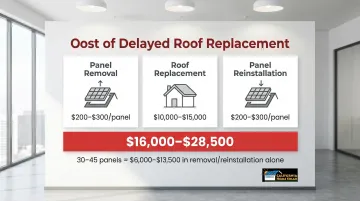
- Panel removal: $200–$300 per panel
- Roof replacement: $10,000–$15,000 (typical asphalt roof)
- Panel reinstallation: $200–$300 per panel
For a typical 10–15 kW Southern California residential system (30–45 panels):
- Removal and reinstallation alone: $6,000 to $13,500
- Total project cost including new roof: $16,000 to $28,500
Every dollar of that comes from a decision you could have made before the panels went up.
Performance and Warranty Consequences
Beyond direct costs, you face:
- Temporary removal often voids the panel manufacturer's product warranty entirely
- Panels risk physical damage during removal or storage — especially older panels with existing micro-cracks
- Your system generates nothing during the full roof replacement period, typically 1–3 weeks of lost utility bill offset
The "Shady Installer" Scenario
Those consequences don't happen by accident. Some solar contractors knowingly install on borderline or failing roofs to close the sale faster, leaving homeowners to absorb the costs later. To protect yourself:
- Insist on a third-party roof inspection before signing
- Ask the installer directly: "What is your policy if my roof needs replacement after solar is installed?"
- Get their assessment of your roof's remaining life in writing
- Verify they're willing to coordinate or bundle roof replacement if needed
Working with a contractor who handles both roofing and solar — like CA Home Solar — removes the coordination risk. When one company assesses the roof before installation and carries out both projects, there's no dispute over which contractor caused a problem or who's responsible for fixing it.
How to Bundle Roof Replacement and Solar Installation for Maximum Value
When replacement is needed, bundling both projects is almost always the smarter financial move.
Aligned Lifecycle Benefit
When you replace the roof and install solar simultaneously, both systems reach end-of-life at approximately the same time. That alignment means:
- No mid-cycle disruption
- No forced removal costs
- No gap in solar savings
- One comprehensive project instead of two separate disruptions
This alignment is the single strongest financial case for bundling.
Consolidated Project Logistics
Bundling creates operational efficiencies that directly reduce costs:
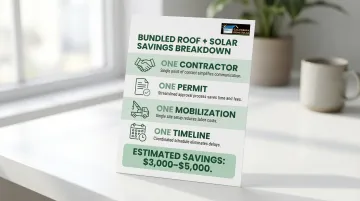
- One contractor or coordinated team – no scheduling conflicts between separate companies
- One permitting process – single application for both scopes in most jurisdictions
- One mobilization cost – equipment, scaffolding, and crews set up once
- Single project timeline – compressed schedule reduces total disruption
Estimated savings: $3,000–$5,000 compared to running two separate projects with duplicate setup, teardown, and permit pulls.
Financing Advantage
Bundling allows you to finance both under a single loan. CA Home Solar offers HERO financing (Property Assessed Clean Energy or PACE program) that covers both solar and qualifying roofing upgrades under one application.
HERO program benefits:
- Zero down payment
- 5–25 year flexible terms
- Payments billed through property taxes
- Approval based on home equity and payment history, not credit score
- Doesn't affect eligibility for solar rebates or federal tax credits
The Upgrade Opportunity
When replacing a roof before solar, you can choose materials that complement solar performance:
- Cool roof coatings or reflective materials – reduce attic heat gain by up to 50°F
- Lower cooling loads – reduces air conditioning demand by 10–30%
- Solar output goes further – less energy needed for cooling means more surplus to offset other usage
California Title 24 already requires cool roofing materials for many replacements in Southern California climate zones, making this an easy upgrade.
How to Structure the Bundled Project
The roofing team should complete their work first (either section by section or full-roof), then the solar installer mounts panels knowing exactly where attachment points will be. This allows:
- Roofers to reinforce mounting areas with additional blocking
- Proper flashing installation around all penetrations
- Clean, watertight integration between roofing and solar systems
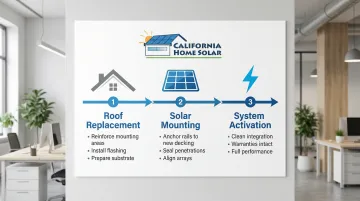
CA Home Solar handles both roofing and solar installations, so homeowners don't have to manage two separate contractors or two competing schedules. With 36 years in Southern California, the team has the sequencing down — roofing first, solar second, no rework.
Conclusion
The right decision depends entirely on your roof's age, condition, and material. A professional inspection gives you the one number that matters: how many years of life the roof has left compared to the 25–30 years a solar system will run. That comparison drives the answer.
If your roof has fewer than 10–15 years of remaining life, replacement before solar is the smart move. The alternative is paying for removal and reinstallation later—an avoidable expense of $6,000 to $13,500 that erases years of solar savings.
When replacement is needed, bundling it with solar is the smarter financial move. The $3,000–$5,000 you save goes directly toward paying down the system. Key reasons bundling works:
- Eliminates future panel removal and reinstallation costs
- Aligns roof and solar lifecycles so nothing needs replacing mid-system
- Simplifies financing through programs like HERO
- Starts your solar savings immediately on a solid, warranted roof
Frequently Asked Questions
Will solar companies replace your roof for free?
No—"free roof" offers are typically bundled or discounted deals where the roof cost is rolled into the solar loan. Some offers refer to solar shingles (like Tesla Solar Roof), where the roof material is part of the solar product itself, not a separate gift.
Can I get a new roof and solar panels at the same time?
Yes, and this is often the preferred approach. Bundling reduces labor costs by $3,000–$5,000, aligns system lifespans, allows coordinated installation, and can be financed together under a single HERO or solar loan.
What happens if you need a new roof and have solar panels?
Panels must be temporarily removed, the roof replaced, and panels reinstalled. This costs $200–$300 per panel ($6,000–$13,500 total for a typical system), may void some warranties, and pauses solar generation throughout the process.
How old can your roof be for solar panels?
Most installers recommend replacing asphalt roofs over 15–20 years old before installing solar. Roofs under 10 years old in good condition are generally safe to proceed without replacement, though a professional inspection will confirm whether yours qualifies.
How much does it cost to bundle a roof replacement with solar installation?
A bundled project typically costs $30,000–$60,000 depending on system size and roofing material—$3,000–$5,000 less than scheduling both projects separately, thanks to shared labor, permitting, and mobilization costs.
Does replacing my roof before solar affect my solar warranties?
Replacing the roof before solar actually protects warranties. A new roof gives installers a clean foundation and ensures roof warranty coverage for the area under the panels. Installing solar on a flagged roof risks voiding the installer's workmanship warranty.